
Window Sticker vs Dealer Addendum: Know What You're Paying For?
Search Window Sticker
Table of Contents
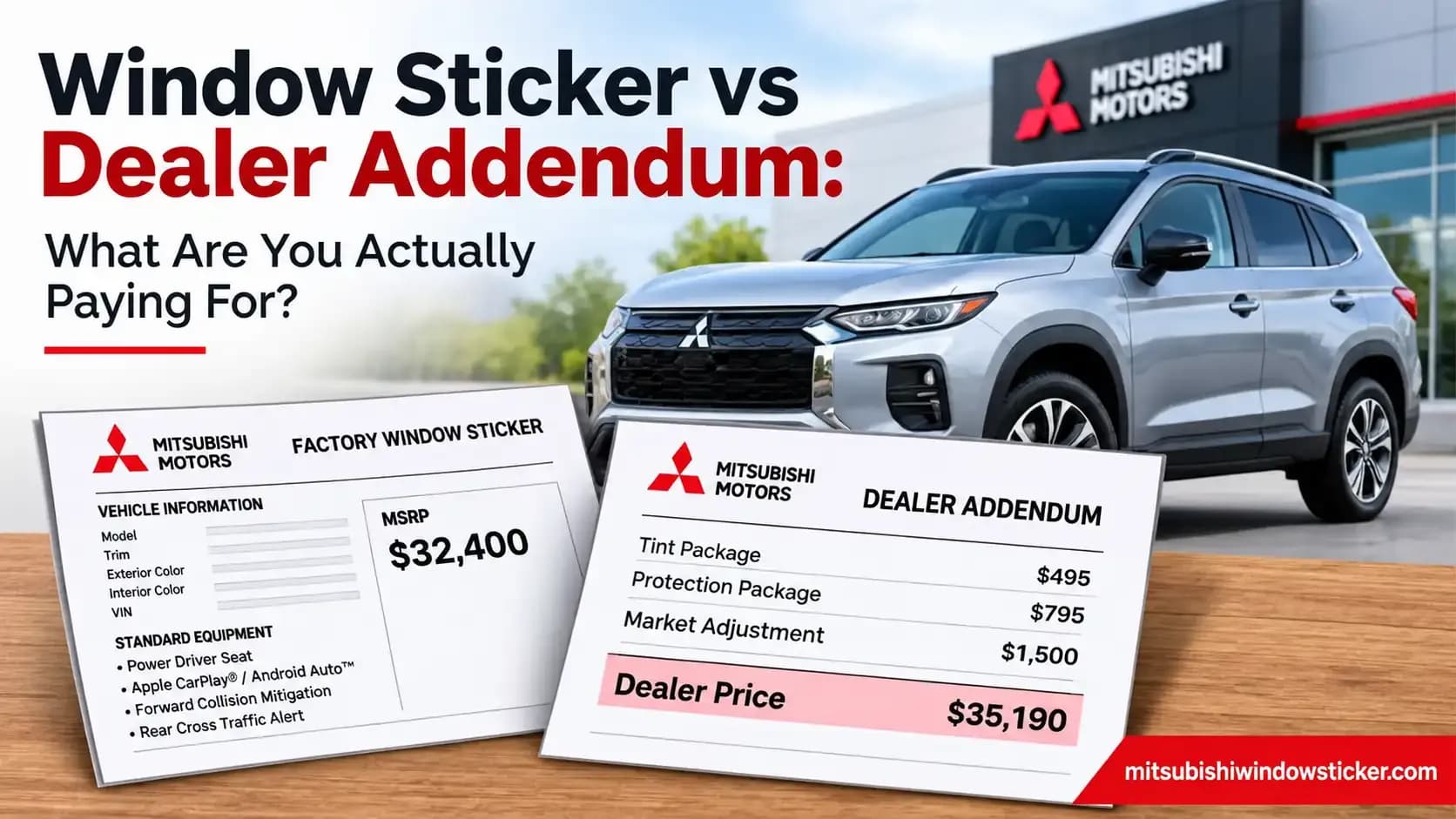
A window sticker and a dealer addendum can sit beside each other on the same vehicle, but they do not represent the same thing.
The factory window sticker shows the manufacturer’s original configuration and suggested pricing. The dealer addendum shows items or price changes added by the dealership.
That distinction matters when the displayed price is higher than the factory total. Before negotiating, separate the manufacturer’s numbers from the dealer’s additions so you know what you are actually paying for.
Key Takeaways
 The factory window sticker shows manufacturer pricing, factory options, and the vehicle’s original configuration.
- A dealer addendum can show dealer-installed accessories, protection products, services, or a market adjustment.
- Compare both documents with the written out-the-door price so factory charges, dealer additions, and transaction costs stay separate.
Window Sticker vs Dealer Addendum: The Quick Difference?
The easiest way to compare the two documents is to ask who created each number.
Document | Created by | Main Purpose | Typical Items |
Factory window sticker | Manufacturer | Show original vehicle configuration and suggested pricing | Base MSRP, factory options, packages, manufacturer destination charge |
Dealer addendum | Dealership | Show dealership additions or price changes | Accessories, protection products, services, market adjustment |
A dealer addendum does not replace the factory sticker. It adds another pricing layer on top of the manufacturer’s original information.
What Can Appear on a Dealer Addendum?
Dealer addendums vary by dealership and vehicle. Read each line separately so you can distinguish products or services from a pure price increase.
Dealer-Installed Accessories
A dealer may add tint, wheel locks, floor mats, appearance items, security hardware, roof equipment, or other accessories after the vehicle reaches the dealership. These items can have real value, but they are not automatically factory-installed. Compare them with the factory sticker before treating them as original factory equipment today.
Protection Products and Services
An addendum may include paint protection, fabric protection, appearance packages, prepaid maintenance, or similar dealer products. The important question is what the charge actually includes. Ask whether the product is already installed, whether it is optional, and what coverage, duration, limitations, or service you receive for the listed price clearly.
Market Adjustment or Dealer Markup
A market adjustment raises the selling price without adding a physical factory option. It may also appear as additional dealer markup or a similar label. Treat this separately from accessories because you are paying more for the vehicle itself, not receiving another factory-installed feature in exchange for that charge alone.
Dealer Packages That Bundle Several Items
Some dealerships combine accessories and services into one package price. A bundle can make comparison harder because each item is not always priced separately. Ask for the package contents, then decide whether those items matter to you. Do not assume a dealer package is part of the manufacturer’s original configuration.
How to Read a Window Sticker and Addendum Together
Read the documents in sequence instead of jumping directly to the highest displayed number. This four-step check shows where each part of the price came from.
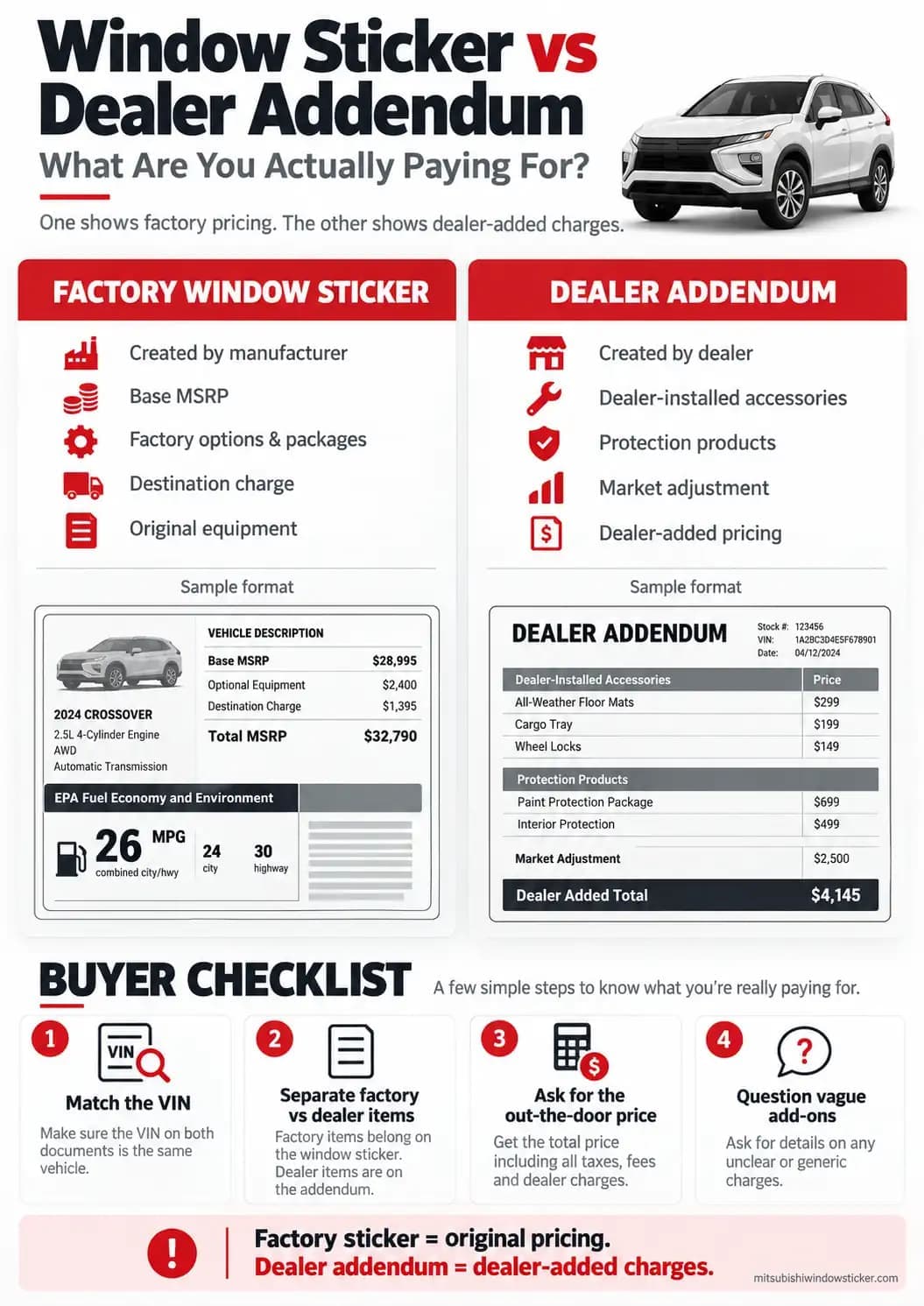
1. Start With the Exact VIN and Factory Total
Match the VIN on the vehicle with the factory window sticker before comparing prices. Review the original base MSRP, factory-installed options, packages, and manufacturer destination charge. This gives you the correct factory baseline for that specific vehicle instead of relying on another car with a similar model name or trim.
2. Identify Every Dealer-Added Line
Move to the dealer addendum and read each line separately. Mark accessories, protection products, service packages, and any market adjustment. If a description is vague, ask what the charge includes. The goal is to understand the source of every addition before deciding whether the dealership’s asking price actually makes sense.
3. Separate Products From Pure Markup
Do not treat every addendum line as the same kind of cost. An installed accessory gives you a product, while a market adjustment increases the price without adding equipment. Separating those categories helps you decide what has practical value, what you might negotiate, and what another dealership may price differently.
4. Ask for the Out-the-Door Price
Finish with a written out-the-door price showing the selling price, dealer additions, taxes, title, registration, documentation, and other disclosed charges. This prevents a sticker comparison from becoming confused with the final transaction total. Review the lines individually so you can question one charge without losing track of the total overall.
What Are You Actually Paying For?
A higher displayed price can contain several different layers. They should not be judged the same way.
Pricing Layer | What You Are Paying For? | Best Question To Ask |
Base MSRP | Manufacturer’s suggested base price | Does this match the exact trim and VIN? |
Factory options/packages | Manufacturer-listed equipment | Are these shown on the factory sticker? |
Manufacturer destination charge | Manufacturer-listed transportation charge | Is it already included in the factory total? |
Dealer accessory | Item added by the dealership | Is it installed, useful, and fairly priced? |
Protection/service product | Dealer-sold service or protection | What exactly do I receive? |
Market adjustment | Extra dealer pricing above the factory figure | Am I willing to pay the premium? |
Taxes/title/registration | Transaction or government-related costs | Are they shown separately in the final quote? |
This is why “the car is $3,000 over sticker” is not enough information. You need to know what created the extra $3,000.
Can You Negotiate a Dealer Addendum?
Some addendum items may be negotiable. Others may already be installed or priced according to the dealership’s policy. Instead of asking only whether the entire addendum can disappear, work through the lines individually:
- Is the item already installed?
- Can it be removed?
- Is the product optional?
- Can the price be reduced if it stays?
- Is it a product, service, or pure markup?
- Does another dealer offer the same vehicle without it?
If an item has value to you, judge its price separately. If it does not, make that clear before agreeing to the deal.
How to Compare Two Dealer Offers Fairly
Two dealers can advertise the same model at similar prices while structuring their add-ons differently. Compare the exact VIN and factory configuration first, then line up the dealer-added items:
- Factory sticker total;
- Dealer accessories;
- Protection or service packages;
- Market adjustment;
- Documentation or dealer fees; and
- Written out-the-door price.
This keeps a lower headline price from looking better simply because some charges appear later. If the two vehicles have different factory options, account for those differences before deciding which dealer actually offers the better price.
A Simple Pricing Example
Suppose a Mitsubishi has a hypothetical factory sticker total of $32,400. The dealer then places an addendum beside it.
Line item | Example Amount |
Factory sticker total | $32,400 |
Dealer-installed tint | +$495 |
Protection package | +$795 |
Market adjustment | +$1,500 |
Displayed dealer price | +$$35,190 |
The difference is $2,790, but that amount contains three different things:
- An installed accessory;
- A dealer protection product; and
- Pure markup
That distinction changes the negotiation. You might value the tint, decline the protection package, and question the market adjustment. Looking only at the final number would hide those choices.
Why the Factory Window Sticker Still Matters?
The addendum tells you what the dealer changed. The factory sticker gives you the baseline needed to identify that change. A window sticker can help you review the original trim, factory options, packages, and manufacturer pricing for the vehicle.
If your main goal is checking the original manufacturer price, the Mitsubishi MSRP lookup by VIN provides a more focused reference. Neither tool decides whether a dealer add-on is worth buying. They help separate original factory information from dealership-created pricing.
Why the Dealer Price Can Still Be Higher Than Both Stickers?
Even after comparing the factory sticker and dealer addendum, the final transaction total can still be higher because taxes, title, registration, documentation, and other disclosed charges may be added later.
If your bigger question is why the overall dealer price exceeds the factory figure, you can learn why the dealer price can be higher than the window sticker price. This covers the broader price gap, and focuses specifically on the two documents that often explain where part of that difference came from.
Common Mistakes When Comparing the Two Stickers
Most confusion comes from treating every number as if it came from the manufacturer. Watch for these mistakes:
- Assuming the dealer addendum is part of the factory sticker;
- Treating a dealer-installed accessory as a factory option;
- Paying a destination-style charge twice without asking why;
- Assuming a dealer package name came from the manufacturer;
- Comparing monthly payment instead of total selling price;
- Overlooking a market adjustment mixed with accessories; and
- Comparing two vehicles without checking whether their factory equipment matches.
Keep manufacturer pricing, dealer pricing, and final transaction charges in separate buckets.
New Car vs Used Car: Does the Addendum Mean the Same Thing?
Dealer addendums are most closely associated with new-car pricing, where the manufacturer’s factory sticker gives you a clear original reference beside the dealer’s additions. A used vehicle can still have dealer-added accessories, protection products, or dealership pricing changes. But its original window sticker is historical information.
Do not assume an old MSRP sets today’s used-car value simply because you have the original sticker. Current used-car value depends on factors such as:
- Mileage;
- Condition;
- Equipment;
- Demand; and
- Comparable vehicles.
Quick Checklist Before You Agree to the Price
If one charge still cannot be explained clearly, resolve it before moving on to financing or monthly payment. Before signing, make sure you can answer these questions:
- Does the factory sticker match the exact VIN?
- What is the manufacturer’s suggested total price?
- Which items appear only on the dealer addendum?
- Which addendum items are physical accessories?
- Which items are services or protection products?
- Is there a market adjustment or additional dealer markup?
- Is the manufacturer destination charge already included?
- What is the written out-the-door price?
- Which dealer-added items are negotiable or removable?
Conclusion On Window Sticker vs Dealer Addendum: What to Pay For
A window sticker and a dealer addendum are not competing versions of the same price. The window sticker shows the manufacturer’s original configuration and suggested pricing. The addendum shows what the dealership added afterward.
Read both documents line by line, then compare them with the written out-the-door quote. Once every charge has a clear source, you can decide what is worth paying for, what deserves negotiation, and whether another vehicle offers a cleaner deal.