
Used Car Listing Wrong? Find Out How to Verify Original Data
Search Vehicle Report
Table of Contents
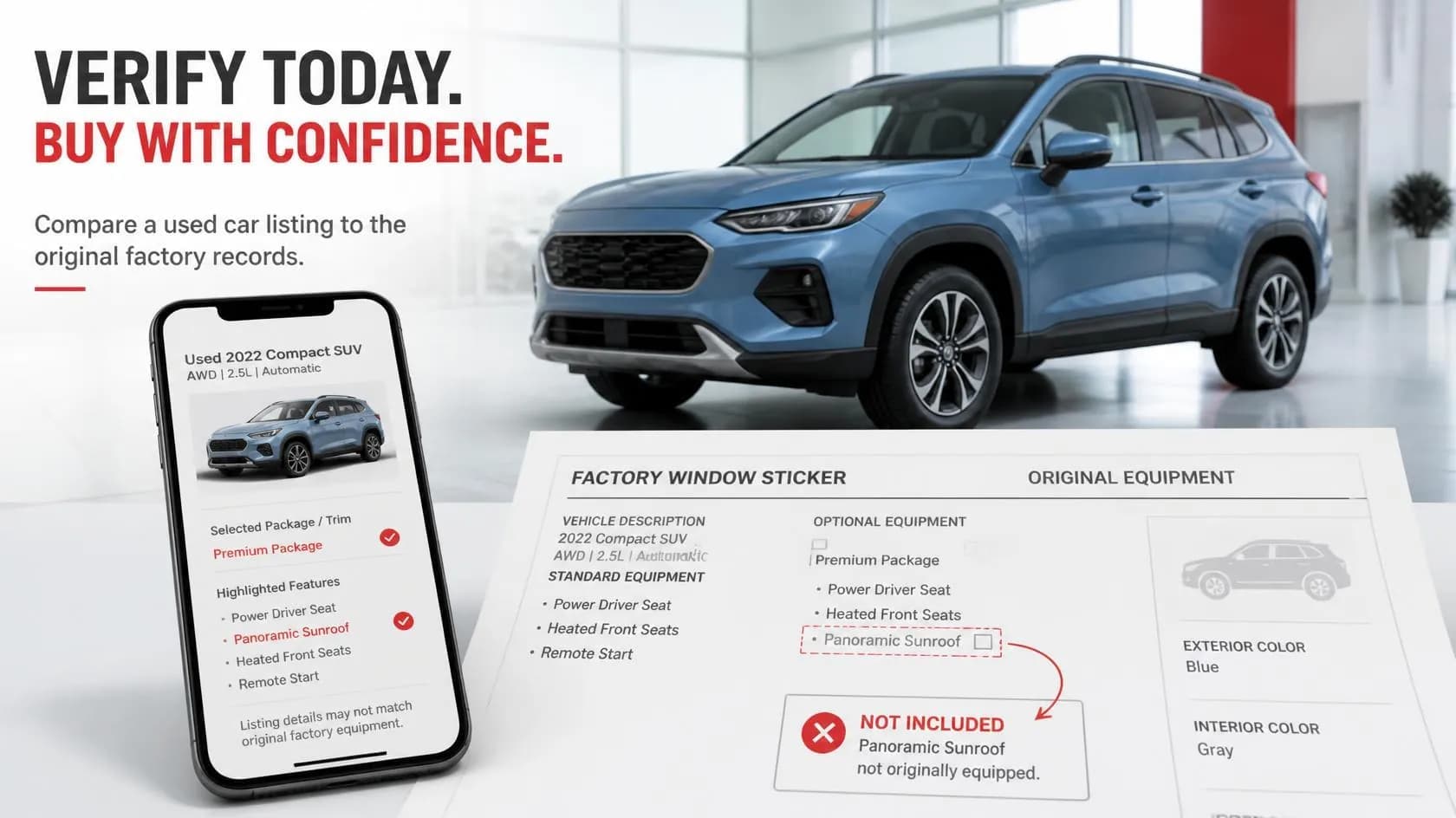
A used car listing can be wrong about the trim, packages, colors, or equipment on a specific vehicle. The error may come from manual entry, an automated inventory feed, copied text, or assumptions about what normally comes with a trim.
Treat the listing as a starting point, not proof. If a feature affects the price or your decision, match the VIN, check a factory record, and confirm the equipment on the actual car.
Key Takeaways
 A listing can show the wrong trim, package, color, or feature even when the VIN is correct.
- A Mitsubishi window sticker or build sheet can help confirm how the vehicle was originally configured.
- Factory records do not prove the current condition. Important equipment should still be checked on the car itself.
Why Used Car Listings Can Be Wrong
Dealers often combine manual information with inventory software and third-party databases. That saves time, but it can also create mismatches between the advertisement and the exact vehicle. Common causes include:
- The wrong trim selected from an inventory menu;
- Optional equipment treated as standard;
- Wording copied from another vehicle;
- Generic feature lists added automatically;
- Old photos or descriptions left after an update; and
- Aftermarket equipment described as factory equipment.
The buyer's job is not to decide why the mistake happened. It is to verify the details that matter before paying for them.
Which Listing Details Should You Verify First?
Not every typo deserves the same attention. Start with details that can change value, safety, comfort, towing ability, or the reason you chose the vehicle.
Listing Detail | Why It Matters? | Best Check |
Trim level | Can change standard equipment and price | VIN-matched factory record plus the actual car |
Factory packages | May bundle expensive features | Window sticker or build sheet |
Engine and drivetrain | Affects performance, fuel use, and capability | VIN data, factory record, physical inspection |
Exterior/interior color | Matters for preference and originality | Factory record plus current photos |
Driver-assistance features | Similar names can describe different systems | Factory record plus an operational check |
Seating and comfort features | Can affect daily usability and resale | Photos, controls, and in-person testing |
Towing equipment | A visible hitch does not prove a factory towing package | Factory documentation plus inspection |
Wheels or appearance upgrades | May be factory, dealer-installed, or aftermarket | Factory record plus current vehicle |
If a feature changes what you are willing to pay, verify it rather than assuming the listing is accurate. You do not need to verify every minor convenience. Prioritize equipment tied to price, safety, towing, seating, or daily use so the process stays quick and practical.
How to Verify What A Used Car Originally Came With?
Use four checks in order. Each answers a different question: Is this the correct vehicle? What did it leave the factory with? Does the listing match that record? Is the equipment still on the car today?
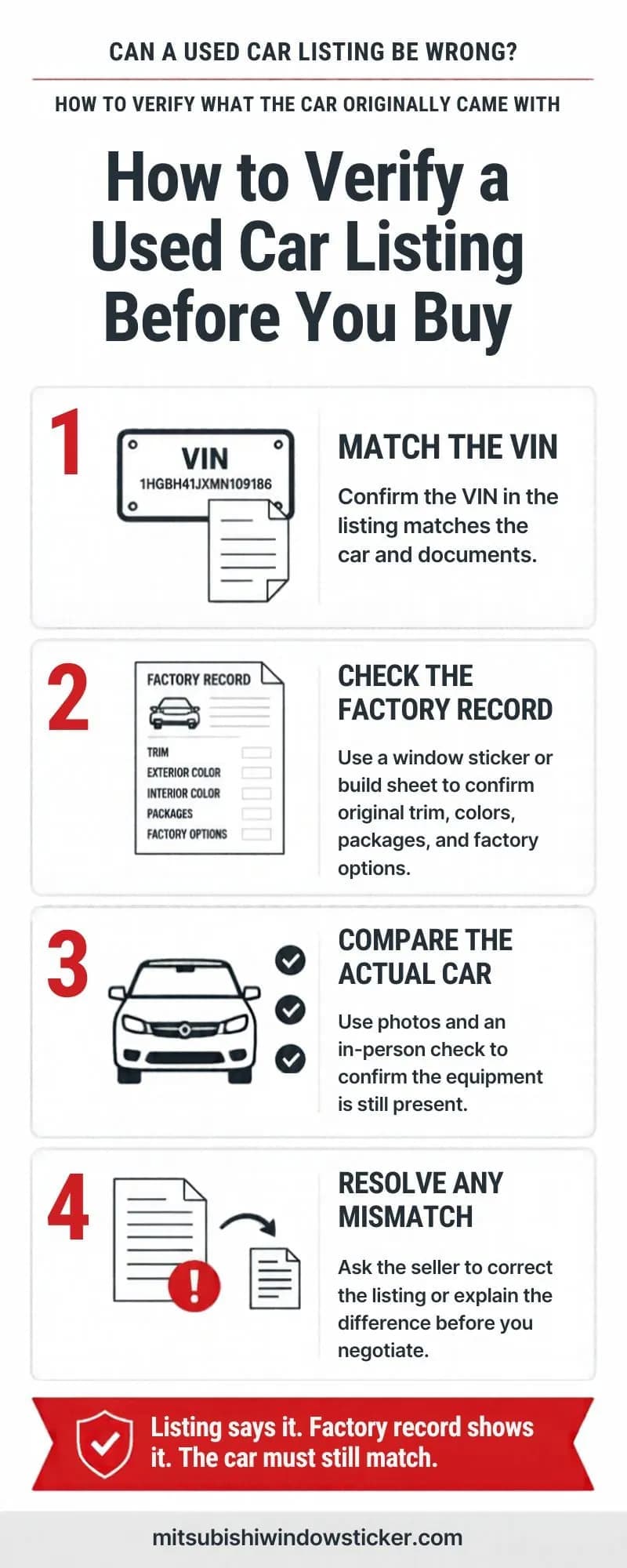
1. Match the VIN to the Exact Vehicle
Copy the full VIN from the listing and compare it with the VIN visible on the vehicle and paperwork. A factory record helps only when it belongs to that exact car. If the year, model, or basic identity conflicts, resolve the mismatch before checking packages, colors, or optional equipment further.
2. Check a Factory Window Sticker or Build Sheet
Use a VIN-matched factory record to review original trim, colors, packages, standard equipment, and factory-installed options. A window sticker is useful for original pricing and listed options, while a build sheet can add configuration detail. Treat either document as evidence of factory configuration, not proof of current condition today alone.
3. Compare the Factory Record With the Listing
Read the advertisement again with the factory record beside it. Mark anything claimed online but missing from the documented configuration, especially premium packages, upgraded audio, driver-assistance features, seating equipment, or towing hardware. A mismatch is a question to resolve, not automatic proof that the seller intentionally misrepresented the vehicle online.
4. Confirm Important Equipment on the Car
Factory documentation shows how the vehicle was built, but a used car may have been modified, repaired, or had equipment removed. Check the actual controls, screens, seats, wheels, cameras, and hardware directly. Test features that matter so your decision reflects the vehicle's current configuration and working condition today before purchase.
Listing vs. Factory Record vs. Actual Car
These sources answer different questions. Keeping them separate makes verification faster.
Source | Best For | Does Not Prove |
Used-car listing | What the seller is advertising | That every detail is correct |
Window sticker | Original pricing, trim, packages, and factory-installed equipment when shown | Current condition or whether equipment still works |
Build sheet | Factory configuration and build details when available | Current physical condition |
Current photos | Visible equipment and condition | Whether an item was factory-installed |
In-person inspection | What is present and working now | The original factory configuration by itself |
A factory document can show that a feature was originally installed. It cannot tell you whether that feature still works years later. Current photos can show a feature is present, but not necessarily whether it came from the factory.
Common Listing Mistakes That Can Change the Deal
Some errors are minor. Others can change the price you are willing to pay. Focus on mismatches that affect equipment, value, or how you plan to use the car.
Wrong Trim Level
A listing may identify a higher or lower trim than the vehicle actually is. That matters because trim can change standard equipment, interior materials, wheels, technology, and original pricing. Compare VIN-matched factory information with the advertised trim, then check trim-specific equipment instead of relying only on exterior badges for proof.
Package Listed but Not Installed
Package names often bundle several desirable features, so an incorrect package claim can make a car appear better equipped than it is. Verify the package on a factory record, then confirm its associated controls or hardware are present. Do not pay a premium for a package that cannot be verified.
Factory Feature Confused With an Aftermarket Upgrade
A used vehicle may have wheels, audio equipment, lighting, remote-start hardware, tint, or other accessories added after sale. Those upgrades may be useful, but they should not automatically be treated as factory equipment. Compare current items with factory documentation before using them to judge originality, package content, or asking price.
Feature Present but No Longer Working
A listing can correctly say a vehicle has a feature while still giving an incomplete picture if that feature does not work. Power seats, cameras, sensors, heated seats, liftgates, and infotainment functions should be tested when they matter. Presence and working condition are separate questions during a used-car purchase decision.
A Practical Example: The Listing Says “Premium Package”
Suppose a used Mitsubishi is advertised with a Premium Package and priced above similar listings. Before paying extra, compare the VIN with the factory window sticker or build sheet.
You might find:
- Heated seats were standard on that trim;
- The upgraded stereo was added later; or
- An advertised driver-assistance feature was never factory-installed.
The important question is not whether the listing says “Premium Package.” It is whether the specific features you want are documented, present, and working. Use those confirmed details when comparing the asking price.
First, confirm that the listing and factory record use the same VIN and model year. If something still does not match, ask the seller about that specific feature rather than making a general complaint.
A simple message works:
“Your listing shows this VIN as having [feature/package], but the factory record does not. Can you confirm whether this vehicle has it and send a current photo or supporting document?”
Then:
- Save the seller's response;
- Ask for the listing to be corrected if necessary;
- Reconsider the price if equipment is missing; and
- Walk away if an important feature cannot be verified.
Broader seller claims need their own checks too. A clean title does not automatically mean a vehicle has no accident or damage history. To assist in your verification, learn how a car can have a clean title and still have accident or damage history. Do not pay extra for equipment or claims that you cannot verify.
How Factory Records Help With Price Negotiation?
Verification gives you something specific to discuss instead of arguing over a vague listing description. If an advertised package is missing, ask whether the price reflects the actual equipment. If a factory option was omitted from the listing, that may make the vehicle more attractive than the advertisement suggests.
Use confirmed information to compare similar cars, including:
- Original trim and packages;
- Factory-installed options;
- Current equipment;
- Mileage and condition;
- Asking price; and
- Missing or nonworking features.
The goal is not to prove the seller wrong. It is to compare what you are being asked to pay with what the vehicle actually offers.
Save the Listing Before You Visit
Online listings can change. Save a screenshot or PDF before you travel, especially when a specific trim, package, or feature is the reason you are considering the car.
Keep three things together:
- 1.The original listing;
- 2.The VIN-matched factory record; and
- 3.A short checklist of features to inspect.
This is especially useful for a long-distance purchase. Ask for current photos or video of important equipment before paying a deposit or spending hours traveling to see the vehicle.
Pro tip: If the seller sends updated photos or a corrected description, save those too. You will have a clear record of what changed and what still needs to be checked in person.
What a Window Sticker Cannot Confirm on a Used Car?
A window sticker is useful for checking original factory configuration, but it is not a current-condition report. It cannot confirm whether:
- A feature still works;
- A factory part was removed;
- Aftermarket equipment was added later;
- A previous owner changed the wheels, stereo, or interior; or
- The vehicle is mechanically sound today.
For deeper factory configuration details, a Mitsubishi build sheet by VIN can provide another reference when available. For the current condition, inspect the vehicle and test the equipment you care about. Use each source for the question it can actually answer.
Conclusion on How to Verify a Wrong Used Car Listing
A used car listing can be wrong even when it looks detailed and professional. The safest approach is simple: match the VIN, check the factory record, compare the advertisement, and inspect the actual car.
A window sticker or build sheet can establish what the Mitsubishi originally came with. The vehicle itself tells you what is still present and working today. When those details match, you can compare the asking price with much more confidence.